Key points
- The flaw allows remote object injection via untrusted data deserialisation.
- It affects Smart Casa versions from initial release through 1.0.12.
- The National Vulnerability Database assigns a CVSS score of 9.8.
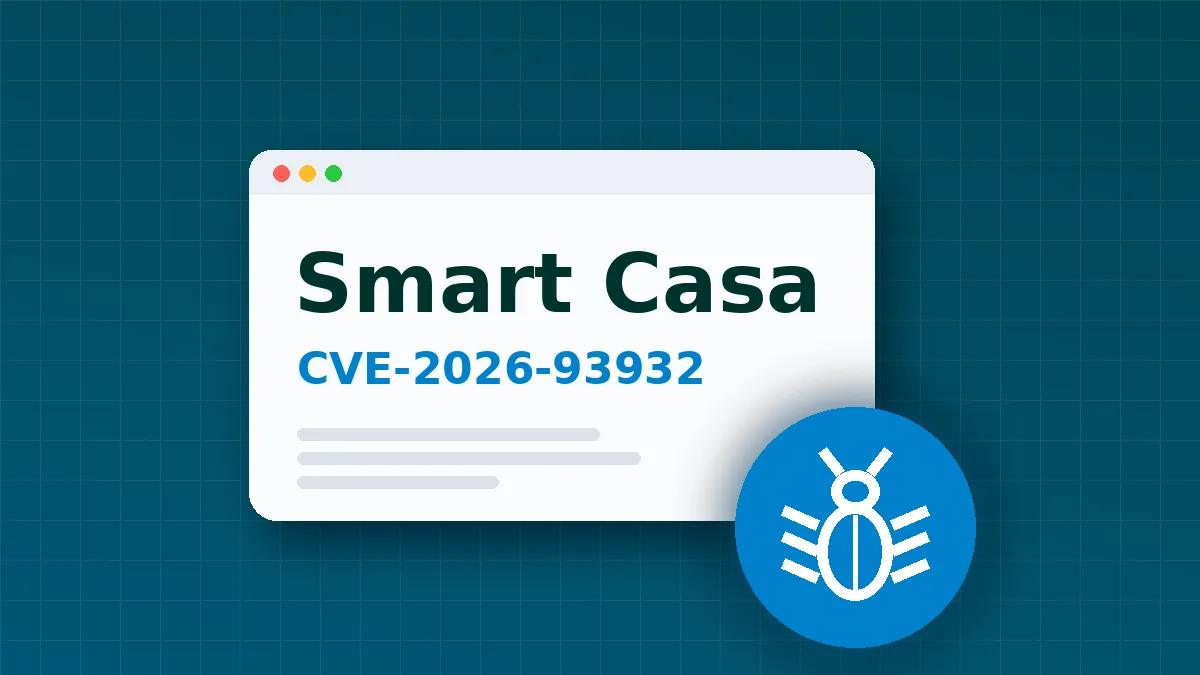
A critical object injection vulnerability has been identified in ThemeREX Group's Smart Casa software, impacting all versions up to and including 1.0.12. The National Vulnerability Database published the advisory for CVE-2026-93932, highlighting the severe risk to users of this smart home management platform.
The National Vulnerability Database rates the issue with a CVSS score of 9.8, classifying it as critical. The weakness stems from CWE-502, which involves the deserialisation of untrusted data. Attackers can exploit this flaw to inject arbitrary objects into the application, potentially compromising system integrity and control functions without needing prior authentication.
Technical Context and Vulnerability Details
The core problem lies in how Smart Casa handles incoming data streams. According to the NVD record, the specific weakness is categorised as CWE-502. This indicates that the application fails to adequately validate or sanitise data before processing it. When the system attempts to reconstruct objects from this untrusted input, it allows malicious payloads to execute within the application's context.
This type of deserialisation flaw is particularly dangerous because it often bypasses standard input validation checks. The National Vulnerability Database confirms that the vulnerability exists in every version of Smart Casa from its earliest release through version 1.0.12. No exceptions or mitigating factors are listed in the current advisory.
Who Is Affected by This Flaw
Organisations and individuals using ThemeREX Group's Smart Casa platform are directly exposed to this threat. The NVD record specifies that the issue affects all versions from n/a through 1.0.12. This broad range means that nearly every user of the software is vulnerable unless they have moved to a newer version, although no patch has been confirmed yet.
Small businesses and residential users relying on this smart home interface should assume their systems are at risk. The advisory from the National Vulnerability Database does not limit the scope to specific configurations, suggesting a widespread impact across all deployments of the affected software versions.
What happens next
Security teams should monitor vendor communications for an official fix or update. Until ThemeREX Group releases a patched version, the risk remains unmitigated. Users may need to consider isolating affected systems or restricting network access to reduce the likelihood of exploitation.
What to do and how to stay safe: Smart Casa
- Audit your Smart Casa installations to confirm if they run version 1.0.12 or earlier.
- Segment network traffic to limit exposure of the vulnerable application to untrusted networks.
- Monitor system logs for unusual object creation or unexpected process injections.
- Wait for an official vendor update before applying any unofficial patches or workarounds.
Step-by-step guide: Vulnerability Scanning for Small Teams: Practical Steps and Limits
General security guidance from the Payload Report newsroom. It is not confirmed advice from the organisations named in this story.
Frequently asked questions
What is CVE-2026-93932?
It is a critical deserialisation of untrusted data vulnerability in Smart Casa that allows object injection.
Which versions of Smart Casa are affected?
All versions from the initial release through 1.0.12 are affected by this flaw.
Is there a patch available?
No fix has been confirmed yet; users should wait for an official vendor update.