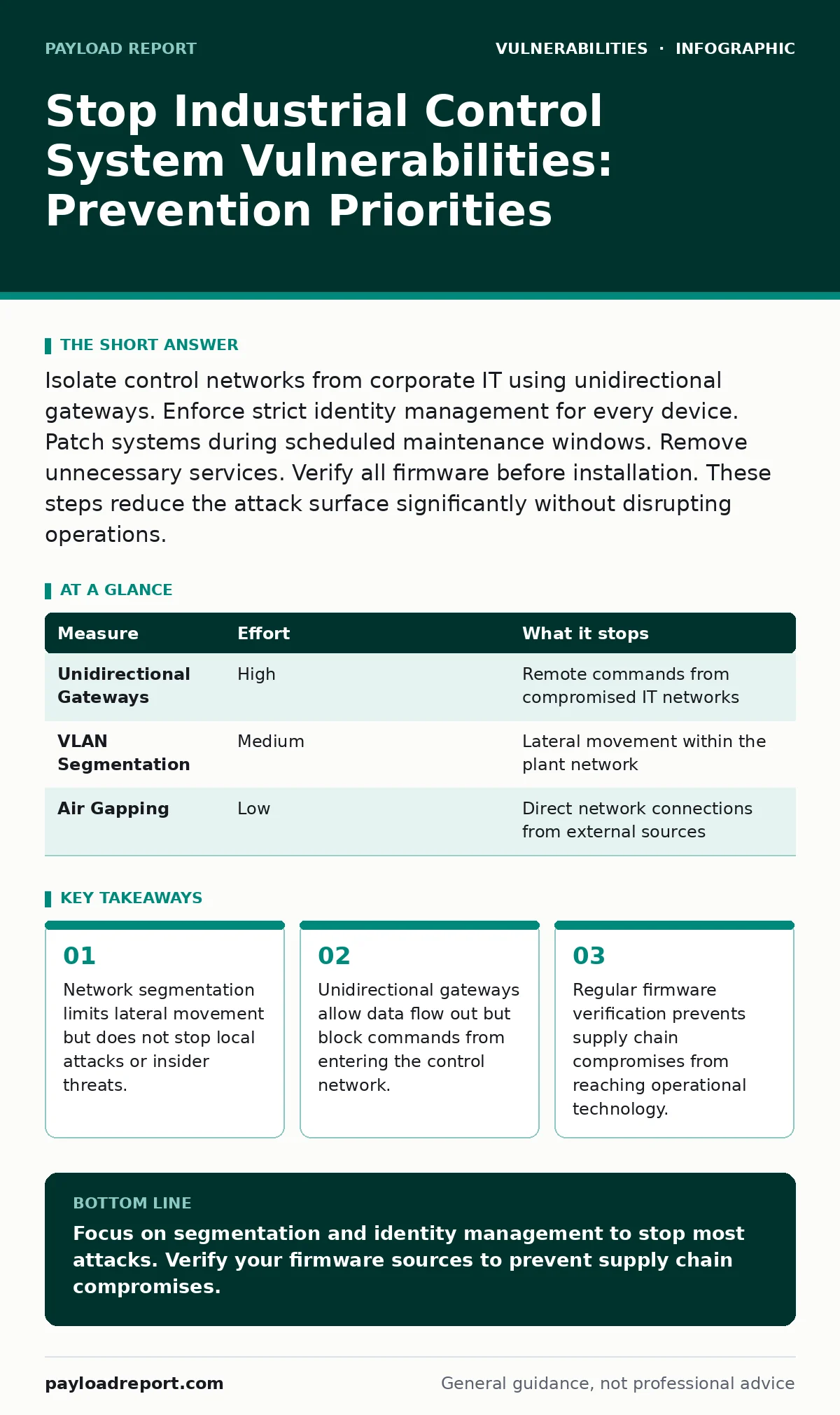
Isolate control networks from corporate IT using unidirectional gateways. Enforce strict identity management for every device. Patch systems during scheduled maintenance windows. Remove unnecessary services. Verify all firmware before installation. These steps reduce the attack surface significantly without disrupting operations.
Prioritise Network Segmentation Over Perimeter Defence
Industrial control systems require a different security approach than standard corporate networks. You must separate operational technology from information technology completely. This separation prevents a compromise in the office network from reaching the plant floor. Imagine a scenario where a phishing email infects a manager’s laptop. Without segmentation, that malware scans for other devices and finds the controller. With proper segmentation, the malware hits a wall.
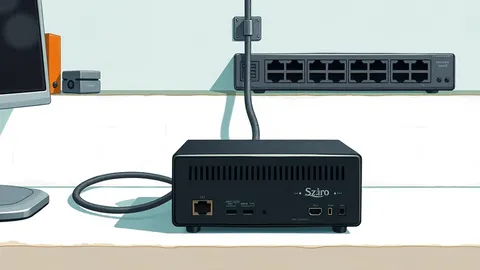
Use a unidirectional gateway to enforce this boundary. A unidirectional gateway is a hardware or software device that allows data to flow in only one direction. It permits telemetry data to move from the control system to the monitoring system. It blocks all command traffic from the monitoring side back to the control side. This mechanism ensures that even if the monitoring network is fully compromised, the attacker cannot send instructions to the physical equipment.
| Measure | Effort | What it stops |
|---|---|---|
| Unidirectional Gateways | High | Remote commands from compromised IT networks |
| VLAN Segmentation | Medium | Lateral movement within the plant network |
| Air Gapping | Low | Direct network connections from external sources |
Enforce Strict Identity and Access Management
Every device and user on the control network needs a unique identity. Shared accounts make it impossible to trace actions back to a specific person or system. You must implement role-based access control. This means users only get the permissions they need to do their specific job. A technician who fixes sensors should not have admin rights to the programmable logic controller configuration.
Multi-factor authentication adds a layer of defence against stolen credentials. If an attacker steals a password, they still cannot log in without the second factor. This second factor is usually a hardware token or a biometric scan. Do not rely on SMS codes for critical infrastructure. SIM swapping attacks can intercept these codes. Hardware tokens are resistant to remote interception and provide a stronger guarantee of the user’s identity.
Verify Firmware and Software Supply Chains
Supply chain attacks are increasingly common. An attacker might compromise a legitimate software update or a hardware component before it reaches you. You must verify the integrity of all firmware and software before installation. This verification involves checking digital signatures. A digital signature is a cryptographic proof that the software has not been altered since the vendor signed it.
Do not trust the source blindly. Even reputable vendors can have their build environments compromised. You should establish a baseline of known good hashes for every critical component. A hash is a unique string of characters generated from the file content. If the hash of the new update does not match the expected value, do not install it. This process protects you from n-day vulnerabilities that exploit trusted relationships between systems and their update servers.
Disable Unnecessary Services and Ports
Industrial devices often come with many services enabled by default. These services increase the attack surface. You must disable any service that is not required for the device’s operation. For example, if a sensor does not need to be managed via a web interface, disable the HTTP service. This reduces the number of entry points an attacker can exploit.
Audit the open ports on every device. An open port is a door into the system. Close any port that does not serve a documented business purpose. This includes legacy protocols that are no longer used. Some older systems rely on proprietary protocols that lack encryption. If you cannot replace these systems, isolate them in a separate segment and monitor all traffic to and from them.
Implement Continuous Monitoring and Logging
You cannot protect what you do not see. Continuous monitoring allows you to detect anomalies in real time. You should log all authentication attempts, configuration changes, and data transfers. These logs provide a trail for forensic analysis after an incident. Store logs in a secure, centralised location that is not accessible from the control network.
Use behavioural analysis to identify suspicious activity. This involves establishing a baseline of normal behaviour for each device. If a device starts sending data at an unusual time or to an unknown destination, the system flags it. This approach helps detect insider threats and compromised accounts that bypass traditional signature-based detection. It complements vulnerability scanning by identifying active exploitation rather than just potential weaknesses.
Plan for Incident Response and Recovery
Prevention is not enough. You must assume that some breaches will occur. An incident response plan outlines the steps to take when a security event happens. This plan should include communication protocols, containment strategies, and recovery procedures. Test this plan regularly through tabletop exercises. These exercises simulate a breach and allow teams to practice their responses.
Maintain offline backups of critical configurations and firmware. If a ransomware attack encrypts your systems, you need a way to restore them quickly. Offline backups are not accessible from the network, making them immune to remote encryption. Ensure that these backups are tested regularly. A backup that cannot be restored is as good as no backup at all.
Address Legacy System Limitations
Many industrial control systems are built on legacy technology. These systems often cannot run modern security software. You cannot simply patch a controller that is ten years old. In these cases, you must use compensating controls. Compensating controls are alternative measures that mitigate the risk when the primary control is not feasible.
Isolate legacy systems in a dedicated segment with strict access controls. Limit the number of devices that can communicate with them. Monitor all traffic to and from these devices closely. Consider replacing critical legacy components with modern equivalents that support security features. This replacement should be part of a long-term capital improvement plan.
Closing Checklist for Immediate Action
Start with these three steps to reduce risk immediately. These actions require minimal effort but provide significant protection.
- Audit and disable all unnecessary services on critical control devices.
- Verify that all network segments are properly isolated with documented rules.
- Ensure that offline backups of configurations are current and tested.
Key takeaways
- Network segmentation limits lateral movement but does not stop local attacks or insider threats.
- Unidirectional gateways allow data flow out but block commands from entering the control network.
- Regular firmware verification prevents supply chain compromises from reaching operational technology.
Focus on segmentation and identity management to stop most attacks. Verify your firmware sources to prevent supply chain compromises.
Frequently asked questions
How do I handle vulnerabilities in systems that cannot be patched?
Isolate the system in a separate network segment. Monitor all traffic to and from it. Use compensating controls like strict access lists.
Is network segmentation enough to protect industrial control systems?
No. Attackers can bypass network boundaries using physical access or removable media. You must also secure identities and verify software integrity.
How often should I test my incident response plan?
Test it at least annually. Update the plan after any significant change to the infrastructure or after a security incident.
Can I use standard vulnerability scanning on control systems?
Standard scanning can disrupt operations. Use passive monitoring and out-of-band scanning methods. Coordinate with operations teams before any active testing.
How this guide was produced: written by the Payload Report editorial team with AI assistance, checked against the public references listed below, and reviewed when the facts change. See our editorial policy or report an error.